

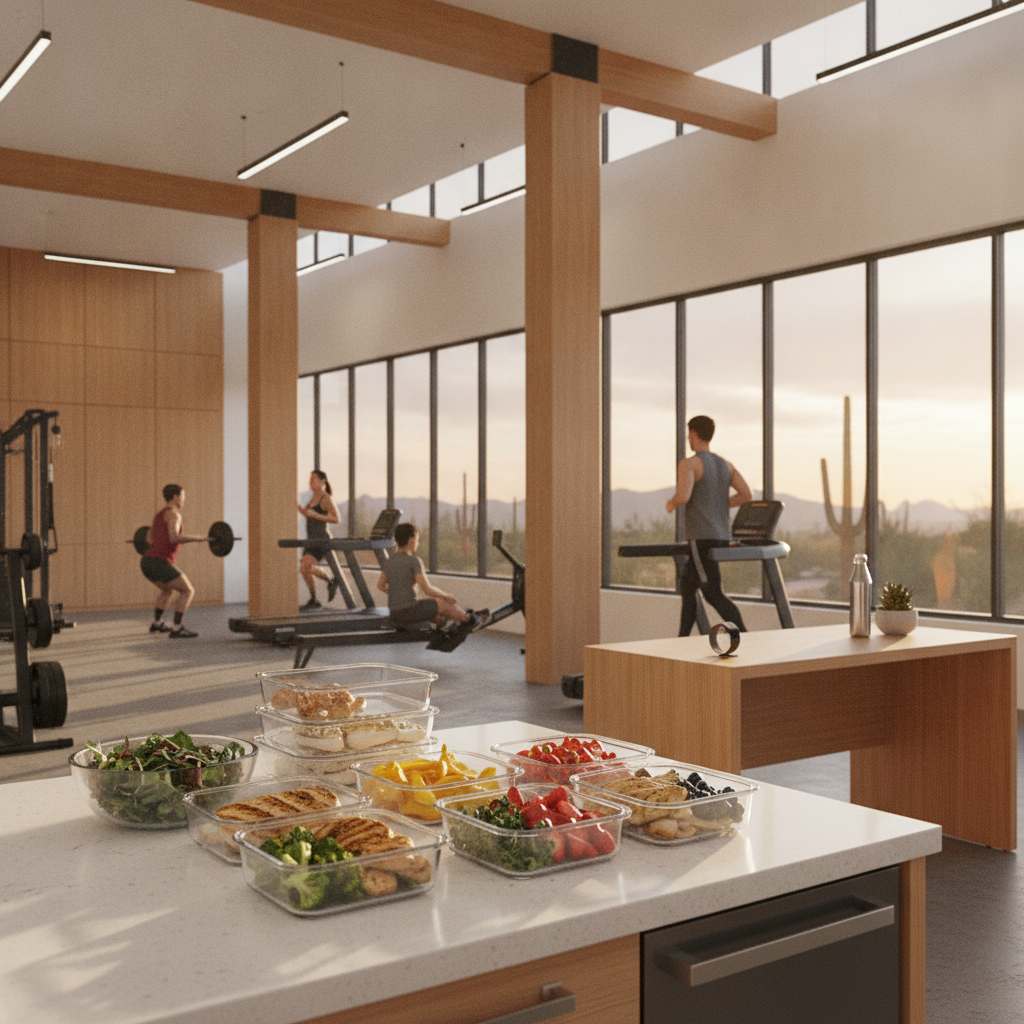
Anyone who has trained hard for months and still felt stuck knows the quiet truth: workouts are only half of the picture. What you eat, when you eat it, and how well you recover decide whether effort turns into lasting change. That is why more people are searching for a Glendale AZ gym that treats nutrition as part of the training plan rather than an afterthought tucked into a pamphlet at the front desk.
We believe sustainable health is built on intentional habits, not on motivation spikes that fade by February. Nutrition coaching and meal planning give structure to those habits. They turn vague goals like “eat better” into measurable daily actions you can actually repeat. A good coach does not hand you a rigid script. They help you understand your own body, your schedule, your preferences, and the science behind what fuels strength, recovery, and longevity.
In this guide, we walk through what real nutrition support looks like inside a gym, what questions to ask before you join, how meal planning fits a busy week, and how to tell whether a program is built for transformation or just for sales. Whether you are a small business owner juggling long days, a developer who sits for hours, or someone simply ready to commit, our goal is to help you find a path that you can follow for years, not weeks.
Why Nutrition Belongs Inside Your Gym Membership
Training creates a stimulus. Food and rest determine how your body responds to it. When a gym separates those two ideas, members often end up working hard without a clear way to support the work. Bringing nutrition under the same roof means your coach can see your training load, your energy, and your recovery all at once, then adjust the plan as a whole.
This integrated approach is the core of what we describe as the best Glendale AZ gym with meal planning experience: one team, one set of goals, and guidance that connects what happens on the floor with what happens in your kitchen. Members benefit from consistent messaging, fewer conflicting opinions, and a single place to ask questions.
Integration also builds accountability. When the person reviewing your training log can also see your weekly food habits, small gaps get noticed early. A skipped breakfast that leaves you flat during an afternoon session is a simple fix when someone is watching the pattern with you.
What Real Nutrition Coaching Actually Includes
The phrase nutrition coaching gets used loosely, so it helps to know what substance looks like. A credible program begins with a conversation, not a template. Your coach should ask about your work schedule, your sleep, your history with food, any medical considerations, and what you want to be able to do a year from now.
From there, coaching typically includes a baseline assessment, a realistic target for energy intake and protein, guidance on meal timing around workouts, and regular check-ins to review what is working. The best programs teach skills such as reading labels, building a balanced plate, and handling restaurants or travel, so you are not dependent on the coach forever.
Be cautious of anything that promises dramatic results on a fixed timeline or pushes a single approach for everyone. Science-backed coaching respects that bodies differ. It favors gradual, measurable adjustments over sweeping rules, and it treats setbacks as information instead of verdicts.
How Meal Planning Fits a Busy Week
Meal planning is not about eating identical chicken and rice for seven days. It is about removing daily decision fatigue so the healthy choice is also the easy one. For people running a business or working long hours at a desk, a simple weekly plan can protect energy during the exact moments when willpower runs thin.
A practical plan usually starts with a short list of go-to breakfasts, a handful of lunches that travel well, and a few dinners that scale up for leftovers. Your coach can help you build around foods you already enjoy, so the plan feels like your life rather than a punishment. Prep sessions of an hour or two on a weekend often cover most of the week.
Flexibility matters just as much as structure. A good plan includes swap options, a backup for chaotic days, and room for social meals. When the plan bends instead of breaks, consistency survives real life, and consistency is what drives long-term results.
Matching Nutrition Support to Your Training Style
Fueling needs change with the type of work you do. Someone lifting heavy three times a week has different priorities than a person preparing for a hybrid race or attending several high-intensity classes. A coach who understands the demands of your training can tailor protein, carbohydrate timing, and hydration accordingly.
Group training environments make this especially relevant. If you are exploring options nearby, Gym Classes in Peoria, AZ show how structured sessions pair naturally with fueling guidance, since coaches see how members perform and recover week after week and can flag when nutrition may be holding progress back.
Ask any prospective gym how their nutrition advice adapts to different programs. A thoughtful answer will reference your schedule, your recovery, and your goals. A generic answer suggests a one-size-fits-all handout rather than genuine coaching.
Questions to Ask Before You Commit
Choosing a program is easier when you walk in with a short list of questions. The answers reveal whether nutrition is a real service or a marketing line. Consider this list as a starting point for your tour or consultation.
- Who delivers the nutrition coaching, and what training or credentials do they hold?
- Is the plan individualized, or do all members receive the same template?
- How often do check-ins happen, and how is progress measured?
- Does coaching adjust when my training load or schedule changes?
- Can I see the full cost, and is nutrition included or billed separately?
Pay attention to how comfortable the staff seem with uncertainty. Honest coaches say “let us test that and adjust” rather than promising guaranteed outcomes. That humility is often the clearest sign of real expertise.
Comparing Cost and Flexibility Without Surprises
Budget is a legitimate part of the decision, and nutrition services can be priced in several ways. Some gyms bundle coaching into a membership tier, others sell it as an add-on, and some offer one-time consultations. Understanding the structure up front prevents frustration later.
If you want a framework for weighing these details, our guide on How to Compare Glendale AZ Fitness Classes by Cost, Trial Options, and Membership Flexibility walks through trial periods, contract terms, and what to confirm before signing. The same logic applies to nutrition add-ons: ask what is included, what can be paused, and how cancellation works.
Value is not simply the lowest price. A slightly higher investment that includes regular coaching, clear measurement, and real support often costs less over a year than a cheap plan you abandon after a month.
Measuring Progress Beyond the Scale
Body weight is one data point, and a noisy one. Hydration, hormones, sleep, and training all shift it from day to day. A strong nutrition program tracks several markers so you see the full story of your transformation, not just a single number that can discourage you for the wrong reasons.
Useful measures include strength and performance trends, energy through the day, sleep quality, waist and body composition changes, and how clothes fit. Many members also value habit metrics, such as how many days they hit their protein target or prepared meals in advance, because those behaviors predict future results.
Reviewing these markers on a regular schedule keeps decisions grounded. When progress stalls, the data helps you and your coach decide whether to adjust food, training, or recovery instead of guessing or abandoning the plan entirely.
A Quick Comparison of Common Nutrition Support Models
Not every gym delivers nutrition the same way. The table below outlines the most common models so you can see how each one tends to fit different needs. Details vary by provider, so treat it as a general guide rather than a promise about any specific location.
| Support Model | Best For | Typical Limitation |
|---|---|---|
| General handouts and tips | Casual members wanting basic ideas | Little personalization or follow-up |
| One-time consultation | People who want a starting framework | No ongoing accountability |
| Ongoing one-on-one coaching | Members with specific, measurable goals | Higher cost and time commitment |
| Integrated coaching with training | Those wanting one coordinated plan | Availability varies by gym |
Convenience and Location Still Matter
Even the best coaching only works if you can show up consistently. Proximity to home or work, parking, and class timing all influence whether a program becomes part of your routine. A shorter commute often beats a more impressive facility that you visit twice a month.
If your daily travel crosses neighboring cities, it helps to think in terms of routes rather than a single address. Our resource, A Local Guide to Peoria AZ Fitness Centers Near Neighborhoods, Schools, and Daily Commutes, offers a useful way to map gyms against your actual week, including school runs and work drives.
Build your nutrition routine around the same logic. If a grocery store or meal-prep window fits naturally into your commute, the plan gets easier. Small alignments like this make the difference between a program you admire and one you actually follow.
Community as a Nutrition Tool
Habits stick more easily when you are surrounded by people working toward similar aims. A supportive community normalizes preparing meals, tracking progress, and asking for help. Members swap recipes, share grocery ideas, and celebrate small wins that a scale would never capture.
This social layer is often underestimated. When you know others are checking in, you are more likely to follow through on the boring but powerful behaviors, like drinking enough water or prepping lunch on Sunday. Encouragement from peers can carry you through the weeks when motivation dips.
Look for gyms that foster this culture on purpose, through events, group challenges, or simple conversation among coaches and members. A welcoming environment lowers the barrier for beginners and keeps experienced members engaged for the long haul.
Building Habits That Last Past the First Month
The first few weeks of any program are fueled by enthusiasm. The real test arrives later, when work gets busy and the novelty fades. Sustainable health depends on habits small enough to survive those moments, which is why strong coaches focus on one or two changes at a time rather than overhauling everything at once.
Start with behaviors you can nearly guarantee, such as adding a protein source to breakfast or keeping a water bottle at your desk. Once those feel automatic, layer in the next change. This gradual path builds confidence and makes progress feel earned instead of forced.
Expect imperfect weeks. What matters is returning to the plan without guilt. A coach can help you reset quickly, review what got in the way, and adjust so the next week goes smoother.
Your Next Steps
Finding the right place to train is really about finding the right partnership. The most effective gyms treat nutrition coaching and meal planning as core parts of the experience, connecting what you do under the bar with what you do at the table. That connection is what turns scattered effort into steady, measurable change.
As you evaluate your options, keep a few principles in mind. Look for individualized guidance rather than generic templates. Choose a program that measures progress in several ways, not just by weight. Confirm costs and flexibility before you commit. And weigh convenience honestly, because the plan you can reach and sustain will always outperform the perfect plan you rarely use.
We encourage you to take one small action this week. Book a consultation, ask the questions from this guide, or simply write down what a realistic week of meals could look like for you. Intentional progress begins with a single clear step, and the right community will help you take the next one. Your path to strength, recovery, and longevity is built one consistent habit at a time, and we are glad to walk it alongside you.






0 Comments