How to Choose a Peoria AZ Gym With Personal Training That Fits Your Goals
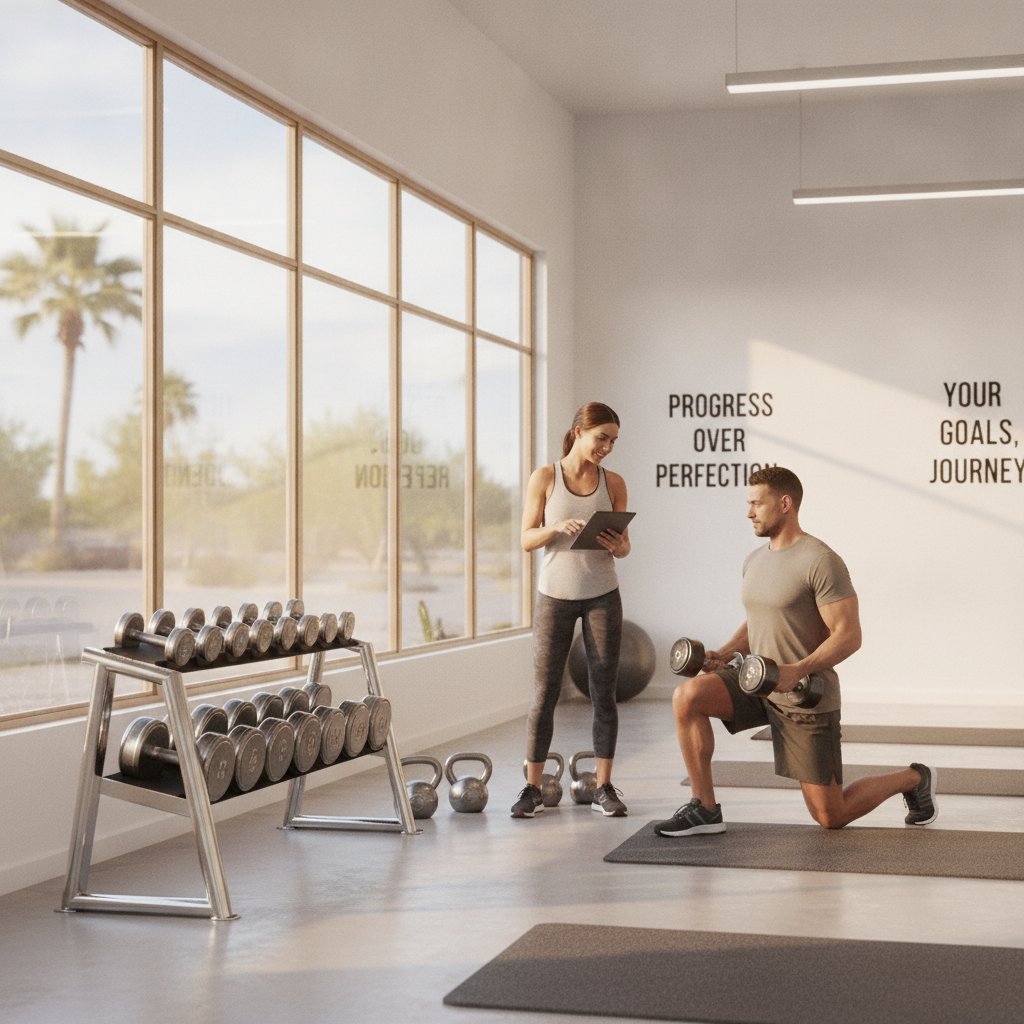
Walk into five different facilities and you will hear five different promises about personal training. Some sound polished, some sound scientific, and some sound like a sales script. If you are searching for a Peoria AZ gym that actually delivers coaching you can build a life around, the real challenge is not finding options. It is knowing which questions separate genuine guidance from expensive hand-holding.
We believe the right training relationship should feel like a path, not a pressure campaign. It should be intentional, measurable, and grounded in science-backed methods that respect where you are today. Whether you want to build strength, support longevity, recover from a long layoff, or simply feel capable in your own body again, the coach and the environment matter as much as the program itself.
In this guide, we walk through a practical framework for evaluating personal training. We cover how to define your goals before you tour, what credentials and coaching styles to look for, how to read pricing structures, and which red flags deserve a second look. We also share a simple comparison table you can bring on your tours. By the end, you will have a clear, repeatable way to choose a training home where you will keep showing up for years, not weeks.
Start With Your Goals, Not the Gym Tour
Most people tour first and think about goals later, which is backward. Before you step into any facility, write down what transformation means to you in plain language. Maybe it is lifting a heavier load than you ever have, moving without joint pain, finishing a first fitness race, or building the energy to keep up with your kids. Specific beats vague every time.
Next, attach a measurable marker to each goal. Strength can be tracked through lifts, mobility through range-of-motion tests, and conditioning through repeatable benchmarks. When your goals are measurable, you can ask every trainer the same question: how would you track this with me? The quality of the answer tells you more than any facility tour ever will.
Finally, decide what kind of support you need. Some members want accountability a few times a week, while others want a program to follow on their own with periodic check-ins. If you are comparing the best gym in Peoria AZ for personal training against other options, your written goals become the yardstick that keeps the decision honest and focused.
Understand Who Is Actually Coaching You
A personal trainer is only as valuable as their knowledge, their attention, and their ability to adapt. Ask about certifications from recognized, accredited organizations, and then go one step further by asking how they continue their education. Strong coaches read, attend workshops, and refine their methods rather than repeating the same routine with every client.
Experience with your specific situation matters too. A coach who regularly works with beginners will teach differently from one who prepares competitive athletes. If you are managing an old injury, returning after pregnancy, or training later in life, ask for examples of how they have supported similar members. Look for stories about progress and patience, not just impressive before-and-after photos.
Pay attention to how they listen during your first conversation. A great trainer asks about your sleep, stress, schedule, and history before they ever mention a workout. If the conversation is mostly about packages and prices, that is a signal. The best coaching begins with curiosity about you, and it keeps that curiosity alive for as long as you train together.
What a Strong First Session Should Include
The first session sets the tone for everything that follows, so treat it as an interview in both directions. A thoughtful trainer will begin with an intake conversation, a review of your health history, and a movement screen that shows how you squat, hinge, push, pull, and carry. These observations shape a program built around you rather than a generic template.
Expect clear communication about what you are doing and why. Good coaches explain the purpose of each drill in simple terms so you understand the logic, not just the motions. They also demonstrate before they ask you to perform, offer cues you can actually remember, and adjust load or complexity if something feels off.
By the end, you should leave with a baseline, a rough roadmap, and a sense of how progress will be tracked. Many members find that group formats complement one-on-one work, which is why exploring Gym Classes in Peoria, AZ alongside personal training can round out a balanced routine. If a session ends without any plan for next steps, treat that as useful information.
Match the Coaching Style to Your Personality
Training styles vary widely, and the best fit is personal. Some coaches are direct and data-driven, tracking every set and adjusting numbers weekly. Others are encouraging and conversational, focusing on confidence and consistency first. Neither approach is wrong, but the wrong match can quietly drain your motivation within a month.
Think about how you respond to feedback. If gentle encouragement helps you stay on track, a drill-sergeant energy will feel exhausting. If you thrive on clear standards and numbers, a vague, feel-good approach may leave you restless. During a trial session, notice how your body and mood feel afterward, not just whether the workout was hard.
It also helps to consider your training environment. Some people want a lively room with plenty of community energy, while others prefer a calm, private space. Women who want focused strength work and a supportive atmosphere may find it useful to read about Glendale AZ Gym Classes for Women Seeking Focused Strength and Supportive Coaching to see how coaching culture shapes the experience.
Read the Pricing Structure Carefully
Personal training pricing can be confusing, and clarity is a sign of a trustworthy business. Common structures include per-session rates, monthly packages, and bundled memberships that combine coaching with facility access. Each model suits a different kind of member, so compare them against how often you realistically plan to train.
Ask what happens when life gets in the way. Are missed sessions forfeited, rescheduled, or credited? How long do packages last before they expire? Does the facility require a long contract, or can you adjust as your needs change? Flexibility matters because sustainable health depends on being able to adapt to busy seasons without penalty.
Look beyond the headline number and consider total value. A slightly higher rate that includes program design, progress check-ins, and between-session support may outperform a cheaper option that only offers someone to count your reps. Request everything in writing, and give yourself time to review it away from any sales pressure.
Seven Questions Worth Asking Every Trainer
A short list of consistent questions makes comparison easy and keeps you from being swayed by charisma alone. Bring these to every consultation and write down the answers so you can compare them later.
- How will you assess my starting point and track my progress over time?
- How do you adjust a program when I am sore, tired, or short on time?
- What does a typical week of training look like for someone with my goals?
- How do you approach recovery, sleep, and stress alongside exercise?
- What happens if I have an injury or need to modify an exercise?
- How do you communicate between sessions, and how quickly do you respond?
- What does success look like at three months, six months, and one year?
Strong coaches welcome these questions and answer them without defensiveness. Vague or rushed responses are worth noting, especially if the answers shift from one conversation to the next.
Evaluate the Training Environment Itself
Even the best coach cannot overcome a poorly suited space. Look at the equipment available for the kind of training you plan to do, including barbells, dumbbells, sleds, cardio machines, and open floor for movement work. Check whether equipment is well maintained and whether there is enough of it that you will not be waiting around mid-session.
Cleanliness, lighting, temperature, and noise level all shape how willing you are to return. Visit at the time of day you expect to train, because a quiet midmorning tour can look very different from a crowded evening. Notice how staff greet members, whether people seem comfortable, and whether the atmosphere feels welcoming to beginners.
Convenience deserves honest weight as well. A facility that sits close to your home or workday route makes consistency far easier, and consistency is the quiet engine of long-term results. Pick a place you can reach without dread, because the best program in the world only works when you actually walk through the door.
Why Community Changes Everything
Training alone with a coach is powerful, but training inside a community is often what keeps people going. When members recognize one another, celebrate small wins, and notice when someone is missing, accountability becomes natural instead of forced. That sense of belonging can carry you through the weeks when motivation dips.
Look for signs of genuine community during your visit. Do members chat before and after sessions? Are there group events, challenges, or classes that bring people together? Do coaches know members by name and remember details about their lives? These small cultural cues reveal whether a facility treats people as clients or as part of something larger.
For many members, mixing personal training with variety is what keeps fitness fresh. Reading about Beyond Traditional Workouts: Specialty Fitness Classes to Try in Glendale AZ, From Aqua Fit to Pole Fitness shows how a wider menu of options can support both enjoyment and long-term commitment alongside focused one-on-one coaching.
Compare Your Options Side by Side
After a few tours and trial sessions, details start to blur together. A simple comparison table keeps your decision grounded in what you actually observed. Copy the categories below into your notes app and score each facility from one to five right after each visit, while impressions are still fresh.
| Evaluation Category | What to Look For | Why It Matters |
|---|---|---|
| Coach Credentials | Accredited certification and ongoing education | Supports safe, science-backed programming |
| Assessment Process | Intake, movement screen, baseline testing | Creates a measurable starting point |
| Pricing Clarity | Transparent rates and flexible cancellation terms | Prevents surprises and supports adaptability |
| Environment | Clean space, quality equipment, manageable crowds | Affects comfort and consistency |
| Community Feel | Friendly members and engaged staff | Builds accountability and belonging |
Tally the scores, but also trust your gut. If one option scored slightly lower yet felt noticeably more welcoming, that feeling deserves weight in the final decision.
Red Flags Worth Taking Seriously
Certain warning signs appear again and again when training relationships go sideways. High-pressure tactics are the most common, including limited-time offers designed to rush you into a long commitment before you have tried a single session. A confident facility lets you experience the coaching first and decide afterward.
Be cautious of trainers who promise dramatic results on unrealistic timelines or who dismiss pain and discomfort as something to push through. Sustainable progress respects the body, and responsible coaches know when to scale back. Likewise, watch for programs that look identical for every client, since that suggests little real personalization is happening behind the scenes.
Finally, notice how a facility handles questions and concerns. Defensive answers, missing paperwork, or reluctance to put terms in writing all point toward a relationship that may not serve you well. Walking away from a poor fit is not a setback. It is simply part of an intentional search for a place that deserves your trust and your time.
Your Next Steps
Choosing a personal training home is one of the most meaningful commitments you can make to your long-term health, and it deserves a thoughtful process. Start by writing down measurable goals, then use those goals to guide every conversation. Ask about credentials, assessment methods, and how progress will be tracked. Compare pricing structures with an eye toward flexibility and total value rather than the lowest number on the page.
Visit at the time of day you plan to train, notice how people treat one another, and take a trial session before you sign anything. Use the comparison table to keep your impressions organized, and give community and coaching style as much weight as equipment and convenience. The right fit will feel supportive, clear, and motivating, not rushed or overwhelming.
Most importantly, remember that sustainable health is built through steady, intentional effort over years, not through any single workout or any single purchase. The best coach is the one who helps you strength-build, recover well, and keep showing up long after the initial excitement fades. Take your time, trust the process, and choose the place where you feel genuinely supported. Your future self will thank you for the care you put into this decision today.